


Recent summers have been hotter and drier than ever, and that puts real strain on outdoor timber. In heat, wood loses moisture, shrinks and moves. Then autumn rain makes it swell again. Every fence lives with that cycle, but a well-made product and a little care make a big difference. This guide explains why our fence panels and gates are built to cope, and the simple steps you can take to keep them looking good for years.
Aftercare at a glance
Go lighterPale shades stay cooler in full sun
Let it breatheKeep plants and soil off the timber
Re-treatEvery 2–3 years with a breathable finish
Check gatesAdjust hinges and latches after hot spells
Why Our Panels and Gates Stand Up Better to the Heat
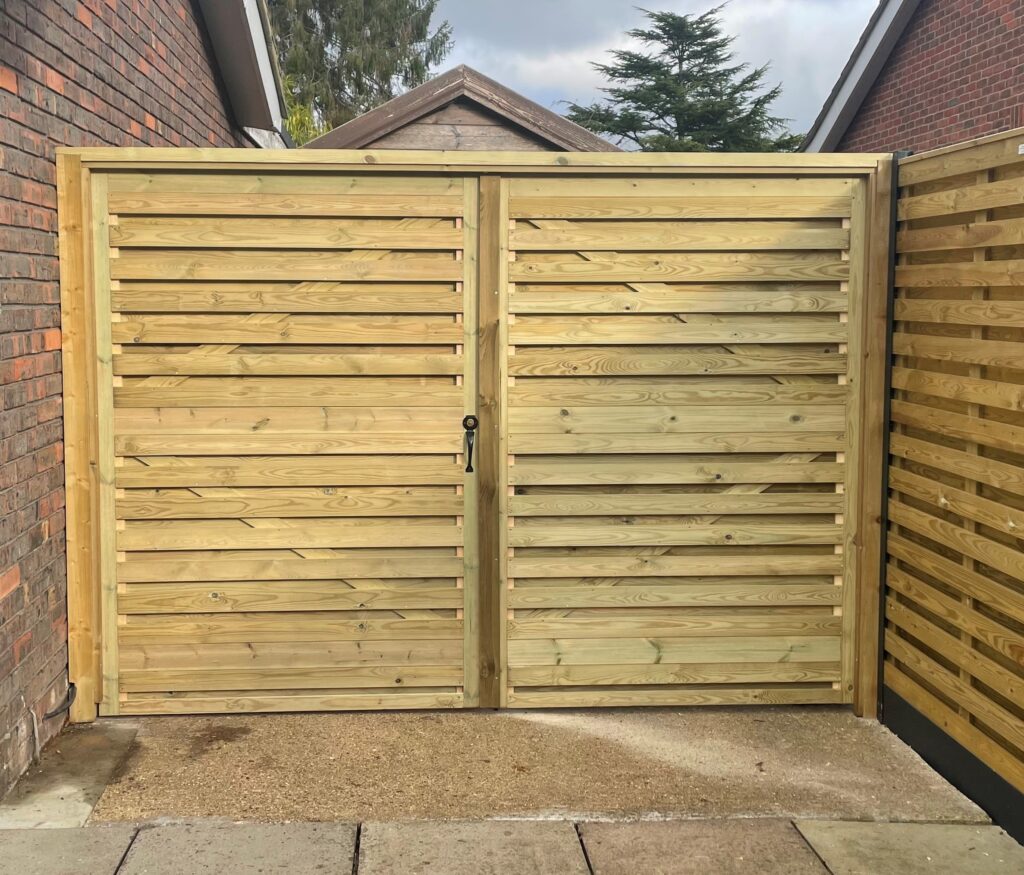
Tolworth Fencing has been making fencing in Morden since 1960. Our gates and panels are built around a framed, ledged and braced construction:
- The frame locks the boards in place around all four edges, so they are held square as the timber moves.
- The ledges (horizontal rails) spread the load across the full width.
- The brace (diagonal) stops the gate or panel dropping and racking out of shape.

Thin, lightweight budget panels have very little structure to resist movement. In a hot spell their slats can twist, split, gap or pop free, and they often need replacing after just a few seasons. Because our products are more substantial and held together by a proper frame, they keep their shape through the heat-and-rain cycle. That means fewer repairs, a longer life and better value over the years.
1. Choose the Right Colour
- Lighter shades stay cooler. Dark colours such as black, charcoal and deep browns absorb much more heat from the sun, so the timber surface gets hotter, dries faster and moves more. This matters most on south- and west-facing runs.
- If you love a dark finish, consider it for shaded sections and use a mid or lighter tone on fences in full sun.
- Expect some fading on sunny elevations whatever the colour. That is normal, and a fresh coat restores it.

2. Use a Breathable Treatment, and Keep It Topped Up
- Use a water-based, breathable fence stain or paint. These let moisture escape rather than trapping it behind a film that can blister and peel in the heat.
- Reapply every 2–3 years, or sooner on very exposed fences. A good time is late spring or early autumn on a dry, mild day, rather than in the heat of mid-summer.
- Make sure the timber is dry and clean before you treat it, and pay extra attention to cut ends, tops and bottom edges, where the wood is most exposed.
- Ask us which treatments work best with our products.
3. Give Your Fence Room to Breathe
Timber lasts longest when it can dry out naturally after rain.
- Keep shrubs and borders a short distance from the fence so air can circulate.
- Don’t let climbers, ivy or heavy foliage smother panels. They hold damp against the wood and add weight.
- Keep soil, mulch, compost and leaves off the bottom rails and gravel boards. Timber sitting against damp soil will rot first.
- Avoid stacking items against the fence for long periods.
4. Use Shade Wisely
- On very exposed sections, well-placed planting, trellis or garden structures can take the edge off the midday sun.
- Aim for dappled shade with good airflow, not dense cover pressed up against the timber.
- During heatwaves, avoid watering plants directly onto the fence. Repeated soaking and baking speeds up movement and cracking.
5. Caring for Your Gate
- After a hot spell, check that the gate still opens and closes freely. Timber movement can make it drag or bind.
- Tighten hinge and latch fixings, and lightly oil hinges and bolts a couple of times a year.
- If a gate starts to catch, have a small adjustment made early rather than forcing it, because forcing it strains the frame.
- Keep the area under the gate clear so it doesn’t scrape on soil or paving.

Simple Seasonal Checklist
- Spring: clear debris from the base, cut back plants, and check fixings and posts. Treat if due.
- Summer: check gates after heatwaves, keep foliage off the timber and avoid soaking the fence.
- Autumn: clear leaves from the bottom rails, check for any loose boards and treat on a dry day if needed.
- Winter: check posts and panels after storms, and keep snow and debris from piling against the fence.
Need Advice, Treatments or Replacement Parts?
Our team is happy to help with aftercare questions, treatment advice and replacement panels, gates and fittings. For quotes and general questions, email us at tolworthfencing@googlemail.com, or call in to the yard.
Opening hours: Monday–Friday 7:00–16:00, Saturday 7:00–12:00.


